How to Choose the Right Water Cart Size for Your Application
Choosing the right water cart size is essential for maximising productivity, improving efficiency and ensuring safe operation on mining and civil sites. Discover the key factors to consider when selecting a water cart capacity suited to your application.
Choosing the right water cart size is an important decision for mining, civil construction and earthmoving operations. The right capacity can improve site productivity, reduce unnecessary trips to refill, and help ensure water is delivered efficiently where it is needed.
However, selecting a water cart isn't simply about choosing the largest tank available. Factors such as operating conditions, terrain, truck configuration and water usage requirements all play an important role in determining the most suitable solution.
At MAP Group, we understand that every operation has different requirements. Here's what to consider when choosing the right water cart size for your application.
1. Understand Your Water Requirements
The first step is determining how much water your operation needs and how frequently it needs to be delivered.
Different applications have significantly different water demands:
- Dust suppression: Mining and civil sites may require regular water application across haul roads, access tracks and working areas.
- Road construction: Water carts are used to achieve and maintain optimum moisture content during compaction.
- Mine site operations: Larger operations may require continuous water delivery across extensive haul road networks.
- General site maintenance: Smaller construction sites may only require occasional watering of access roads and work areas.
Understanding your daily water requirements will help establish whether a smaller, more manoeuvrable water cart or a larger-capacity unit is the better choice.
2. Consider Your Operating Environment
The conditions in which a water cart operates have a significant impact on the appropriate tank size and truck configuration.
Large mining operations
Large mine sites often benefit from higher-capacity water carts capable of carrying substantial volumes of water across extensive haul road networks.
A larger water cart can reduce the number of trips required to refill, helping minimise downtime and improve overall productivity.
However, the truck must still be suitable for the site's haul roads, gradients, turning areas and operating conditions.
Civil construction sites
Civil construction projects may require water carts to operate in tighter spaces, on developing road networks or across uneven terrain.
In these environments, a smaller or more manoeuvrable configuration may provide greater flexibility and allow operators to access areas that larger trucks cannot.
Restricted or challenging terrain
Sites with steep gradients, uneven ground or restricted access require careful consideration of vehicle stability, axle loads and overall configuration.
Tank capacity should always be balanced against the truck's operating capabilities and the conditions in which it will be used.
3. Match Tank Capacity to the Truck Chassis
One of the most important considerations when selecting a water cart is ensuring the tank capacity is appropriate for the truck chassis.
A larger tank isn't necessarily a better solution if the truck cannot safely accommodate the additional water weight.
Water weighs approximately one tonne per 1,000 litres. This means a 20,000-litre tank carries approximately 20 tonnes of water alone, before accounting for the tank, chassis, equipment and other components.
When determining the appropriate capacity, operators should consider:
- Gross vehicle mass (GVM) and gross combination mass (GCM), where applicable
- Axle load limits and weight distribution
- Tank dimensions and mounting configuration
- Suspension and braking capabilities
- Site-specific operating conditions
Ensuring the complete vehicle configuration is suitable for its intended application is essential for safe and reliable operation.
4. Consider Stability and Centre of Gravity
Water cart stability is particularly important when operating on uneven terrain, gradients or challenging mine site conditions.
Tank design, water movement and the vehicle's centre of gravity all influence how a water cart behaves during operation.
A lower centre of gravity can help improve vehicle stability, particularly when combined with an appropriate chassis configuration and tank design.
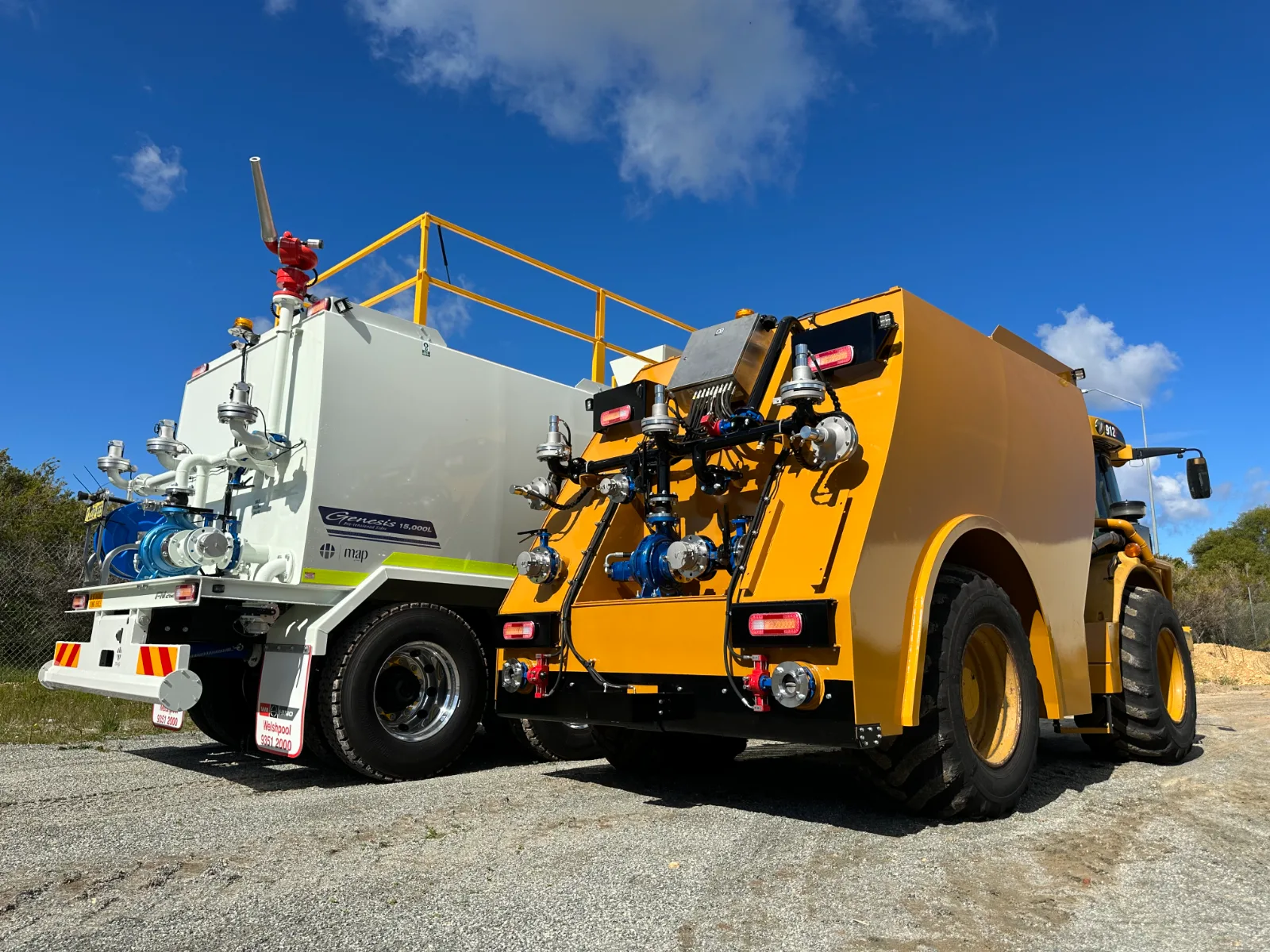
MAP Group's chassisless water cart design incorporates a low centre of gravity to help deliver a stable and practical solution for demanding mining and civil applications.
When selecting a water cart, operators should consider how tank capacity, tank positioning and overall vehicle design work together to support safe operation.
5. Evaluate Productivity and Operating Costs
The right water cart size can have a significant impact on the overall efficiency of an operation.
A smaller water cart may have a lower initial purchase cost and provide greater flexibility in restricted areas. However, if it requires frequent refilling, the additional travel and downtime may reduce productivity.
Conversely, a larger water cart may carry more water per trip but could introduce additional operating costs or limitations depending on the application.
Consider the following when comparing options:
- Water delivered per operating hour
- Distance travelled between refill points
- Refilling time and availability of water
- Fuel consumption
- Maintenance requirements
- Initial purchase price and ongoing operating costs
The most suitable water cart is the one that delivers the best overall value for your specific operation, rather than simply the highest water capacity.
6. Choose a Water Cart Built for Your Application
Water cart requirements can vary significantly between operations, making vehicle configuration just as important as tank capacity.
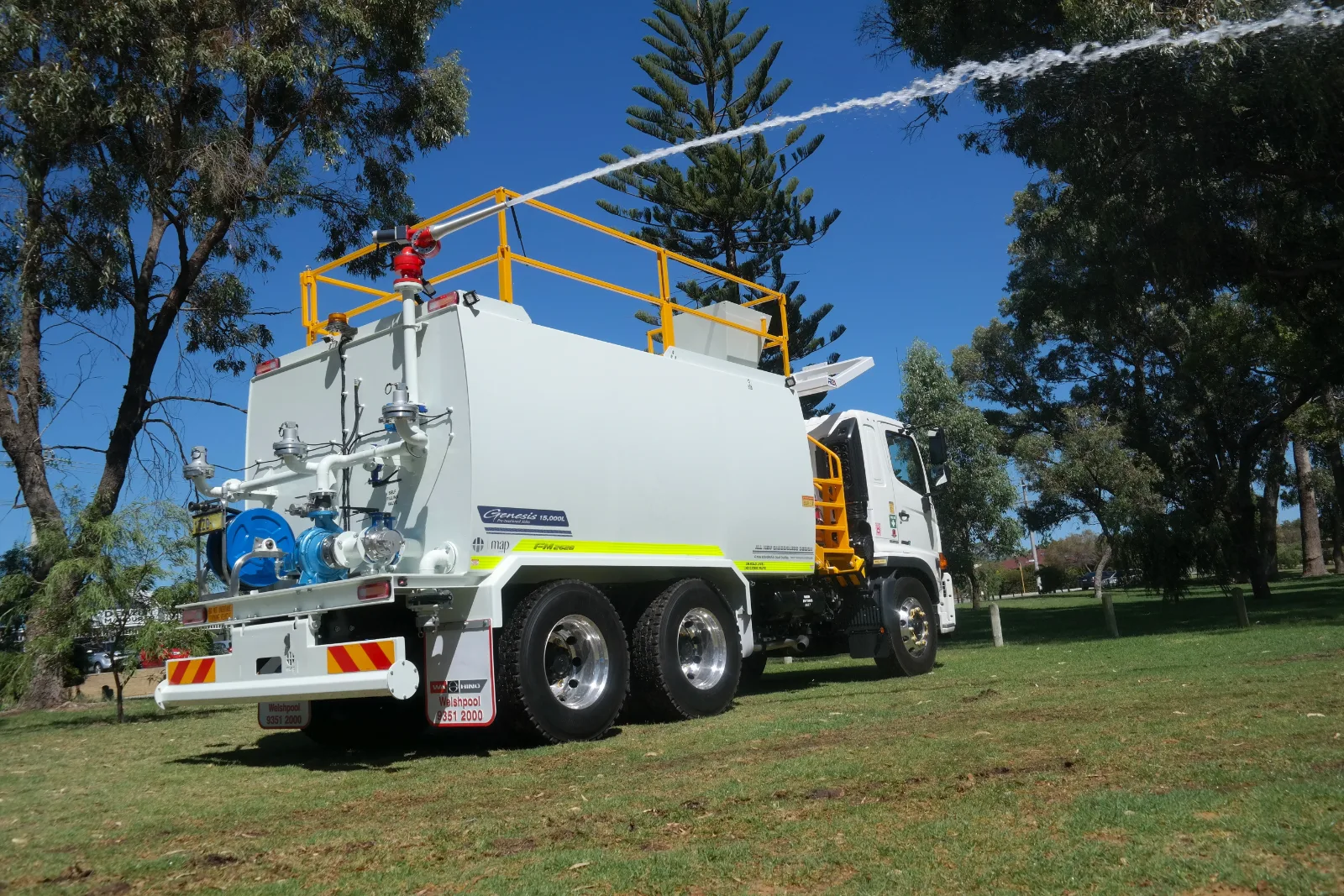
Features such as spray systems, water cannons, hose reels, access platforms, handrails and tank monitoring systems can all influence how effectively a water cart performs its intended role.
For demanding mining and civil applications, a purpose-built water cart can provide a more suitable solution than a standard configuration.
MAP Group specialises in the design and manufacture of water carts for mining, civil construction and other demanding applications, with solutions tailored to suit different truck chassis and operational requirements.
Finding the Right Water Cart for Your Operation
Choosing the right water cart size requires a balance between water capacity, operating conditions, vehicle configuration, safety and productivity.
By understanding your site's requirements and considering the complete vehicle configuration, you can select a water cart that delivers the capacity you need without compromising the suitability of the vehicle for its intended application.
At MAP Group, we work with customers to develop water cart solutions designed around their operational requirements.
Looking for a water cart for your next project? Contact MAP Group to discuss your application and find a water cart solution suited to your site.