What to Consider When Specifying a Tipper Body for Mining and Civil Work
Explore what to consider when selecting a heavy-duty tipper body for mining and civil applications. From 6x4 and 8x4 configurations to fully Hardox construction, curved side walls and mine or civil specifications, discover the features that make a difference.
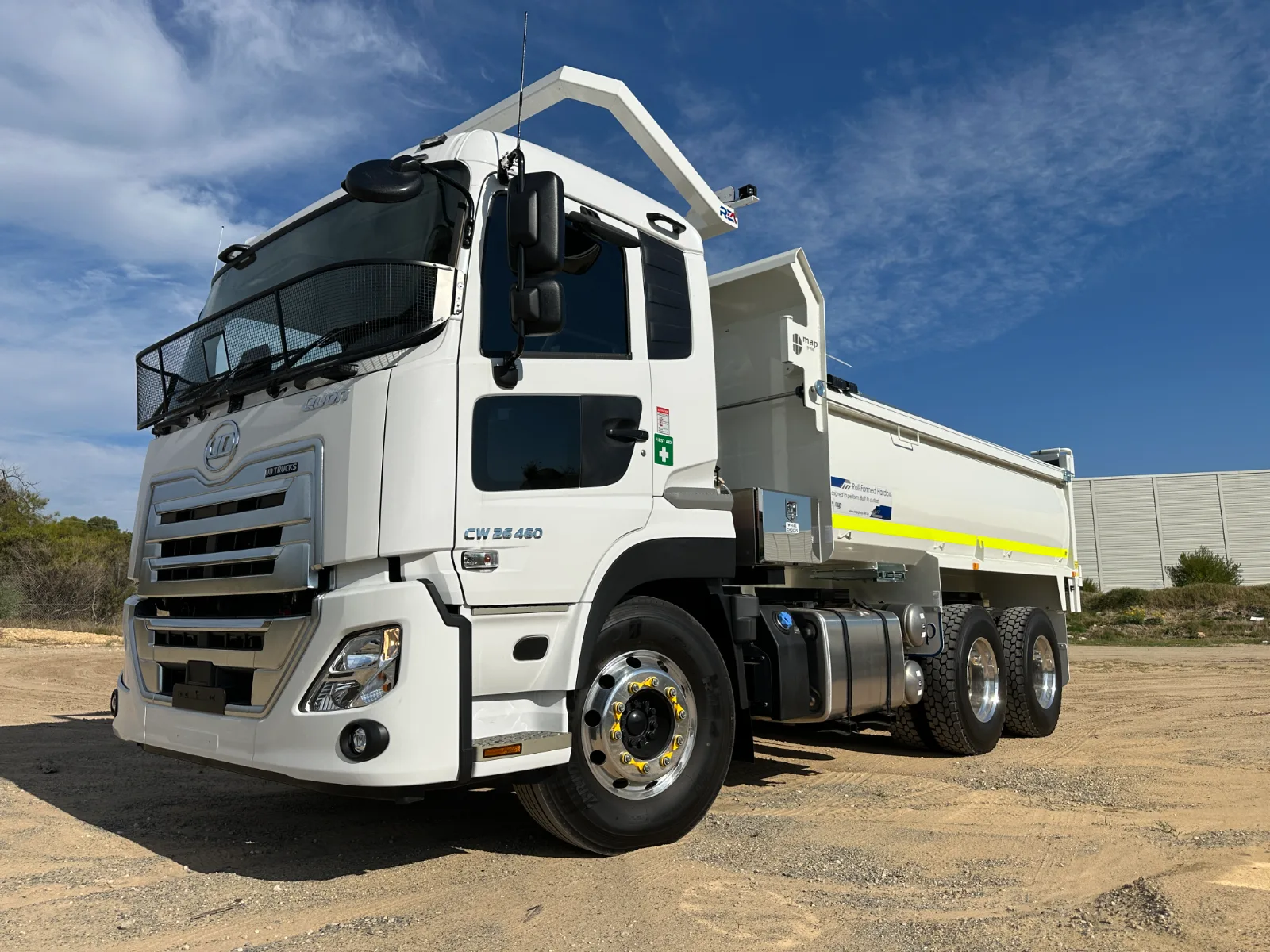
Selecting the right tipper body is an important consideration when purchasing a truck for mining, earthmoving or civil construction. The body needs to withstand demanding operating conditions, handle the required material and provide reliable performance throughout its service life.
Not all tipper bodies are designed for the same applications. Factors such as body construction, material selection, payload capacity, vehicle configuration and operating environment all influence which tipper is best suited to the job.
For operators looking at mining tipper bodies or heavy-duty civil tipper trucks, understanding these considerations can help ensure the right equipment is selected from the outset.
1. Choose the Right Truck Configuration: 6x4 or 8x4
One of the first considerations when specifying a heavy-duty tipper truck is the chassis configuration.
Both 6x4 and 8x4 configurations are commonly used across mining, construction and civil applications, but each offers different advantages depending on the intended workload.
6x4 Tipper Trucks
A 6x4 configuration is a popular choice for general civil construction, earthmoving and transport applications. With two rear drive axles, these trucks provide a practical balance of payload, manoeuvrability and operating capability.
They are commonly suited to:
- General earthmoving and excavation
- Civil construction projects
- Sand, gravel and aggregate transport
- General material handling
8x4 Tipper Trucks
An 8x4 configuration provides an additional axle, offering greater load distribution and the potential for increased carrying capacity, subject to vehicle ratings and applicable regulations.
These configurations are often considered for:
- Heavy-duty mining operations
- Large-scale civil construction
- High-volume material transport
- Applications involving demanding payload requirements
The right configuration will depend on the material being transported, operating conditions, axle ratings and applicable mass limits.
2. Consider Body Construction and Material Selection
A tipper body must withstand repeated loading, unloading and exposure to abrasive materials. The materials used in its construction have a significant influence on durability, wear resistance and long-term performance.
For heavy-duty mining and civil applications, Hardox wear-resistant steel is a popular material choice due to its strength and resistance to abrasion.
MAP Group tipper bodies feature fully Hardox construction, providing wear-resistant steel throughout the body rather than limiting it to selected high-wear areas.
This construction is particularly beneficial when handling abrasive materials such as:
- Rock and crushed stone
- Iron ore
- Gravel and aggregate
- Sand and other bulk materials
Using wear-resistant steel throughout the body helps support long-term durability in demanding operating environments.
3. Why Curved Side Walls Matter
Body shape is another important consideration when selecting a mining or civil tipper body.
MAP Group tipper bodies feature curved side walls, providing a distinctive body profile designed with material flow and practical operation in mind.
Curved side walls can help reduce internal corners where material may otherwise accumulate during unloading. This is particularly relevant when transporting materials that can stick or compact against internal surfaces.
The overall body profile, floor design and tailgate arrangement should all be considered when selecting a tipper body for a particular application.
4. Match the Tipper Body to Your Operating Environment
Mining and civil construction environments place different demands on equipment. A tipper operating in a mine may encounter abrasive materials, uneven haul roads and frequent heavy loading, while a civil construction truck may need to operate across multiple sites and transport a wider variety of materials.
This is why selecting the appropriate specification is just as important as selecting the truck itself.
Mining Specification
Mining applications can require additional equipment and features to suit site-specific operating and safety requirements.
Depending on the application, considerations may include:
- Mine-specification safety equipment
- Additional lighting and visibility requirements
- Site-specific safety and access provisions
- Heavy-duty operating requirements
- Compliance with individual mine site standards
Civil Specification
Civil tipper trucks are generally configured around versatility and the requirements of construction and earthmoving operations.
Considerations may include:
- Practical access and operational convenience
- Suitable lighting and safety equipment
- Application-specific body and tailgate options
- Compatibility with different construction sites
- Overall vehicle manoeuvrability
The appropriate specification will depend on the intended work, customer requirements and individual site standards.
5. Consider Payload and Material Density
Payload is one of the most important factors when selecting a heavy-duty tipper truck.
Different materials have significantly different densities, meaning a truck that is suitable for transporting a particular volume of sand may not be appropriate for the same volume of iron ore or other dense materials.
When assessing payload requirements, consider:
- The typical materials being transported
- Expected load volumes
- Material density
- Vehicle tare mass
- Gross vehicle mass (GVM)
- Gross combination mass (GCM)
- Applicable axle group mass limits
It is important to consider both the carrying capacity of the truck and the structural requirements of the tipper body.
The objective is to achieve a practical balance between payload capacity, durability and compliance with applicable vehicle mass limits.
6. Don't Overlook the Hydraulic System
The hydraulic system is responsible for raising and lowering the tipper body and is an essential part of the overall vehicle specification.
For heavy-duty applications, the hydraulic system needs to be appropriately matched to the body, expected loads and operating conditions.
Important considerations include:
- Hydraulic cylinder capacity
- Lifting performance under load
- Pump and power take-off (PTO) compatibility
- Hydraulic hose and connection protection
- Ease of maintenance and servicing
A properly specified hydraulic system supports reliable tipping performance and helps ensure the body operates as intended throughout its working life.
7. Think About Long-Term Durability and Maintenance
A tipper truck is a significant investment, particularly in mining and civil operations where equipment availability directly affects productivity.
Selecting a body constructed from wear-resistant materials can help manage long-term maintenance requirements, particularly in applications involving abrasive materials.
Other considerations include:
- Accessibility for routine inspections
- Condition of the body floor and side walls
- Hydraulic system maintenance
- Tailgate operation and condition
- Structural inspections and preventative maintenance
Considering the full operating life of the vehicle, rather than simply its initial purchase price, can help operators make a more informed equipment decision.
Choosing the Right Tipper Body for Your Operation
The right tipper body specification ultimately comes down to the intended application, operating environment and material being transported.
Whether you're looking for a 6x4 tipper for general civil construction or an 8x4 heavy-duty tipper for demanding mining operations, it is important to consider the complete vehicle package.
MAP Group manufactures heavy-duty tipper bodies in standard 6x4 and 8x4 configurations, with options available to suit mining and civil specifications.
Featuring fully Hardox construction and distinctive curved side walls, MAP Group tipper bodies are designed for demanding Australian operating environments.
Looking for a heavy-duty mining or civil tipper?
Contact MAP Group to discuss available tipper configurations and specifications for your operation.